

2017–2019
Ohio.gov: a front door built around why people come
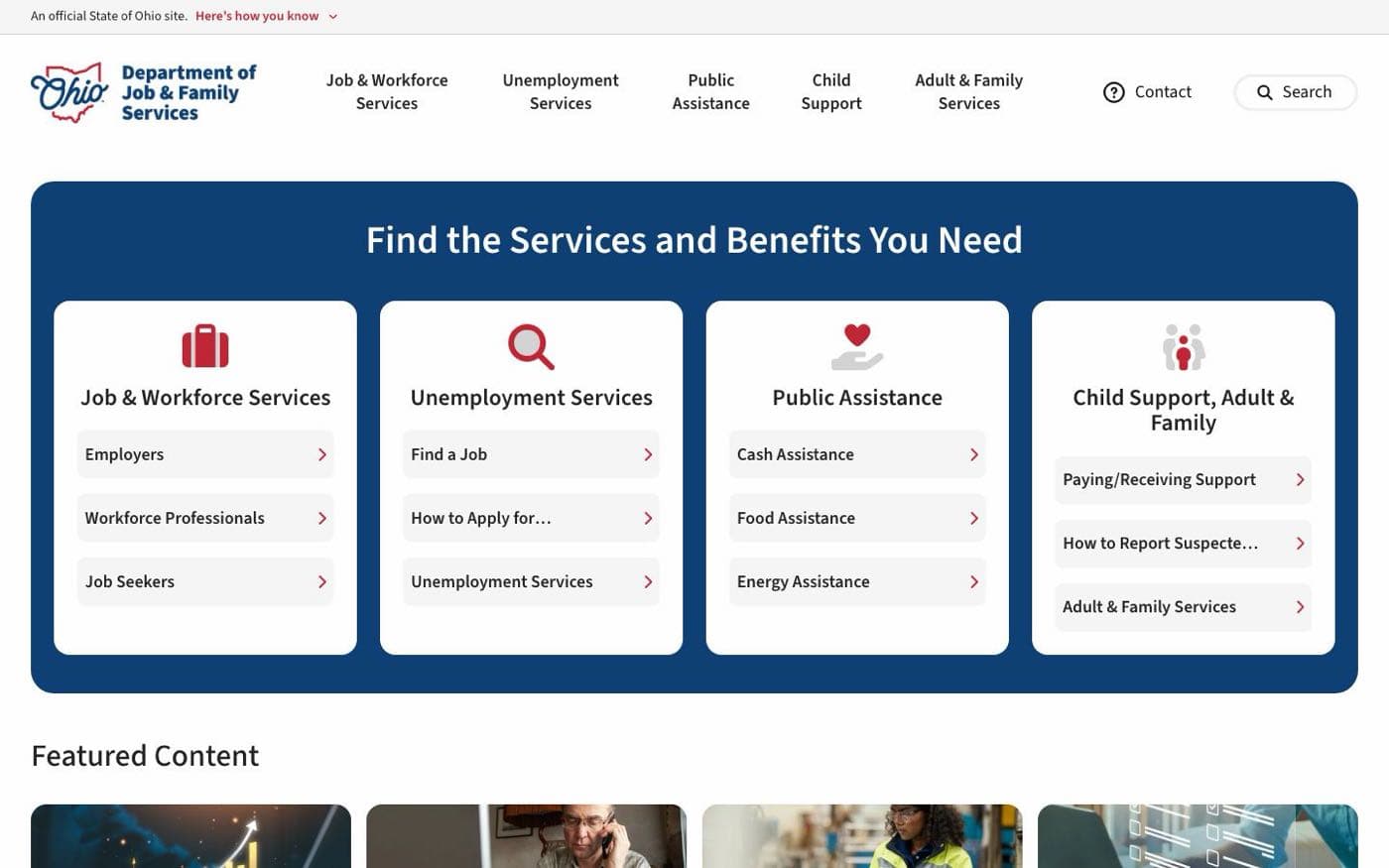
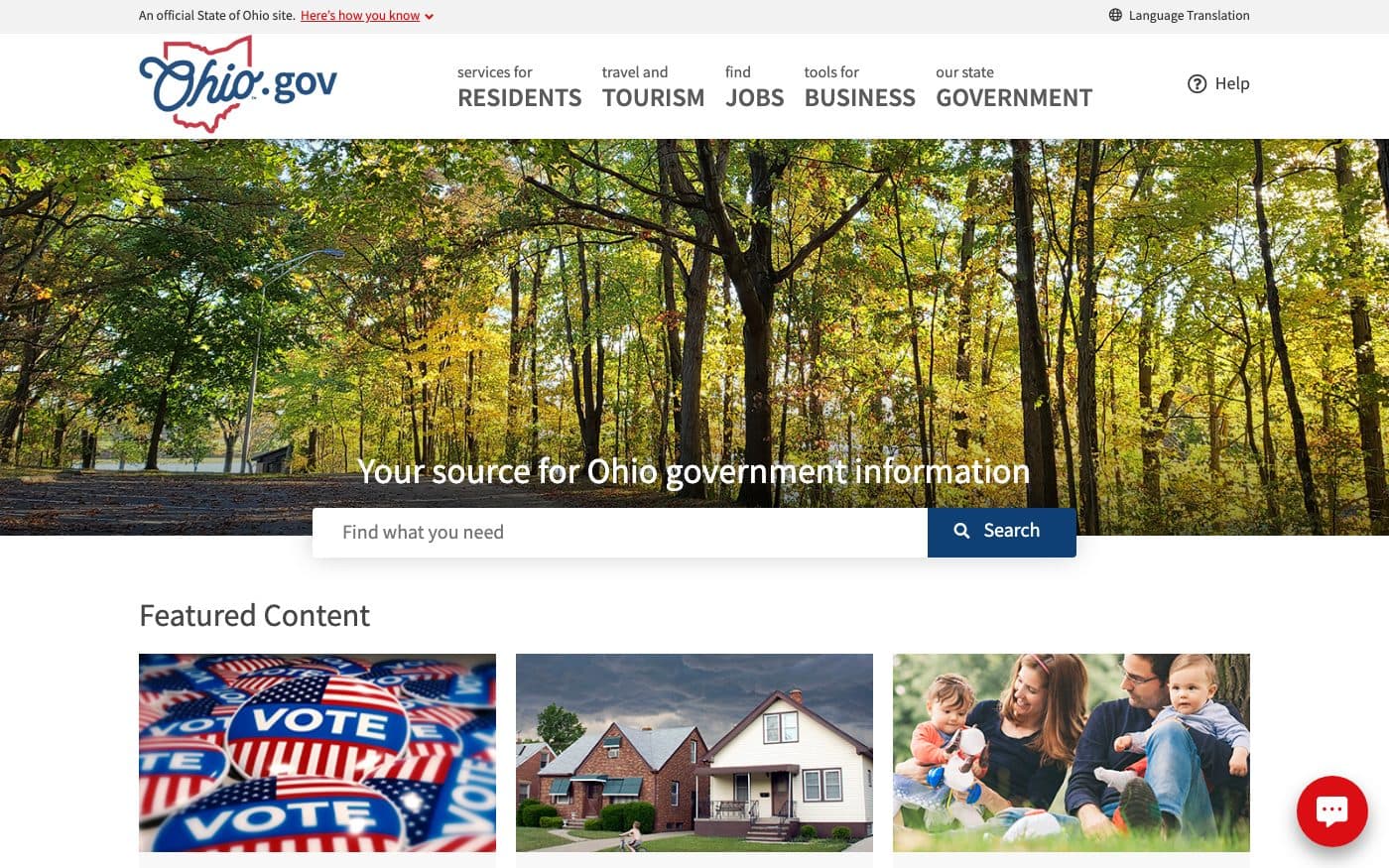
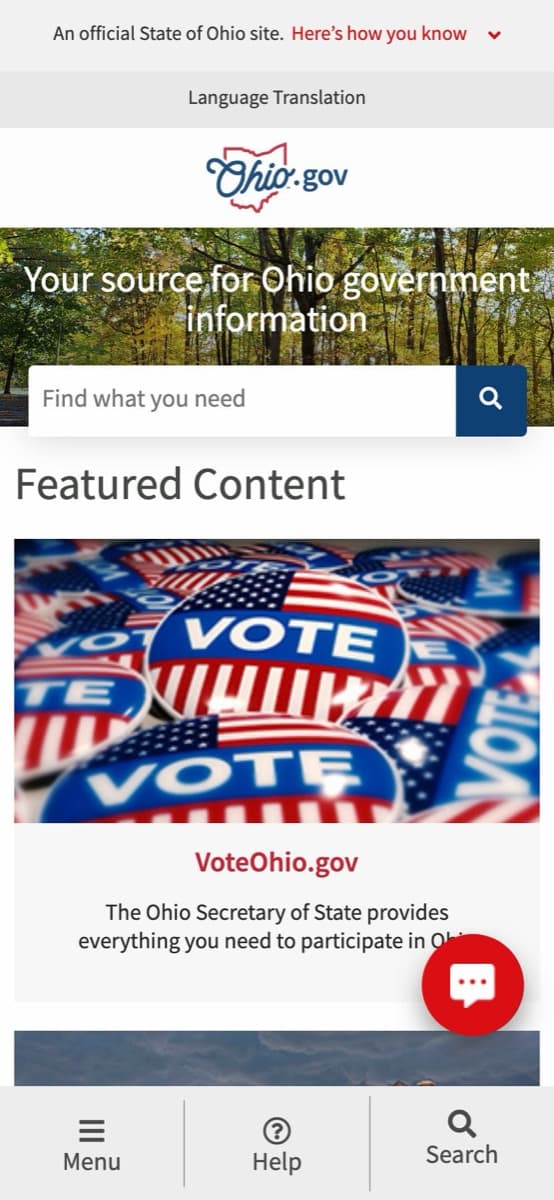
Most people don’t visit Ohio.gov to browse: they need something, or they couldn’t find it on an agency site. In 2017–2018, in a program led by Deloitte, we redesigned and rebuilt Ohio.gov around five things people come for (residents’ services, tourism, jobs, business and State government) and built the site builder that let agency sites start from the same foundation. Eight years later, Ohio.gov still greets people with those five topics.
- 5
- topics from our 2018 redesign that still organize Ohio.gov (September 2026)
- 3
- first agency sites built with the same toolkit, 2018: Agriculture, Health, Workers’ Compensation
- 48
- State websites transformed on the platform by 2020, per the State
- Client
- State of Ohio · Ohio.gov
- Industry
- Public sector
- Scope
- Content-first UX · Information architecture · Site builder · Accessibility testing · Author training
- Platform
- IBM WebSphere Portal (today HCL Digital Experience)
- Partnership
- 2017–2019
Challenge
People come to Ohio.gov because they need something: a job, a license, help with a bill, or an answer they couldn’t find on an agency’s own site. At our kickoff in November 2017, the State’s Ohio.gov team described the site’s job in those terms: to be the plain-language layer on top of agencies that can be hard to understand, and to make things easy to find.
Behind the front door, Ohio had more than 200 State websites, built with hundreds of different tools, with different designs, different words and different levels of accessibility.
Ohio.gov was to be the first public site on the State’s new digital platform, then called Ohio Digital Experience and later the InnovateOhio Platform. Deloitte, which led the program, brought Base22 in to redesign and build it, and to lay the patterns that agency sites would follow as they joined.
Approach
Starting from why people come
We worked with the State’s Ohio.gov team, who also answered people in the site’s live chat, in daily design sessions and with a content-first method: first what people need and the content that answers it, then the pages. The top reasons people called or chatted with the State’s customer service were part of the brief from the kickoff.
Five doors, one level deep
We organized Ohio.gov around five topics: services for residents, travel and tourism, jobs, tools for business, and our State government. Navigation stays one level deep: each topic opens a landing page that shows its sub-topics, with no nested menus to get lost in. On a resource page, the sidebar shows how to get in touch with the agency behind it, not publication details.
A site builder for every agency that followed
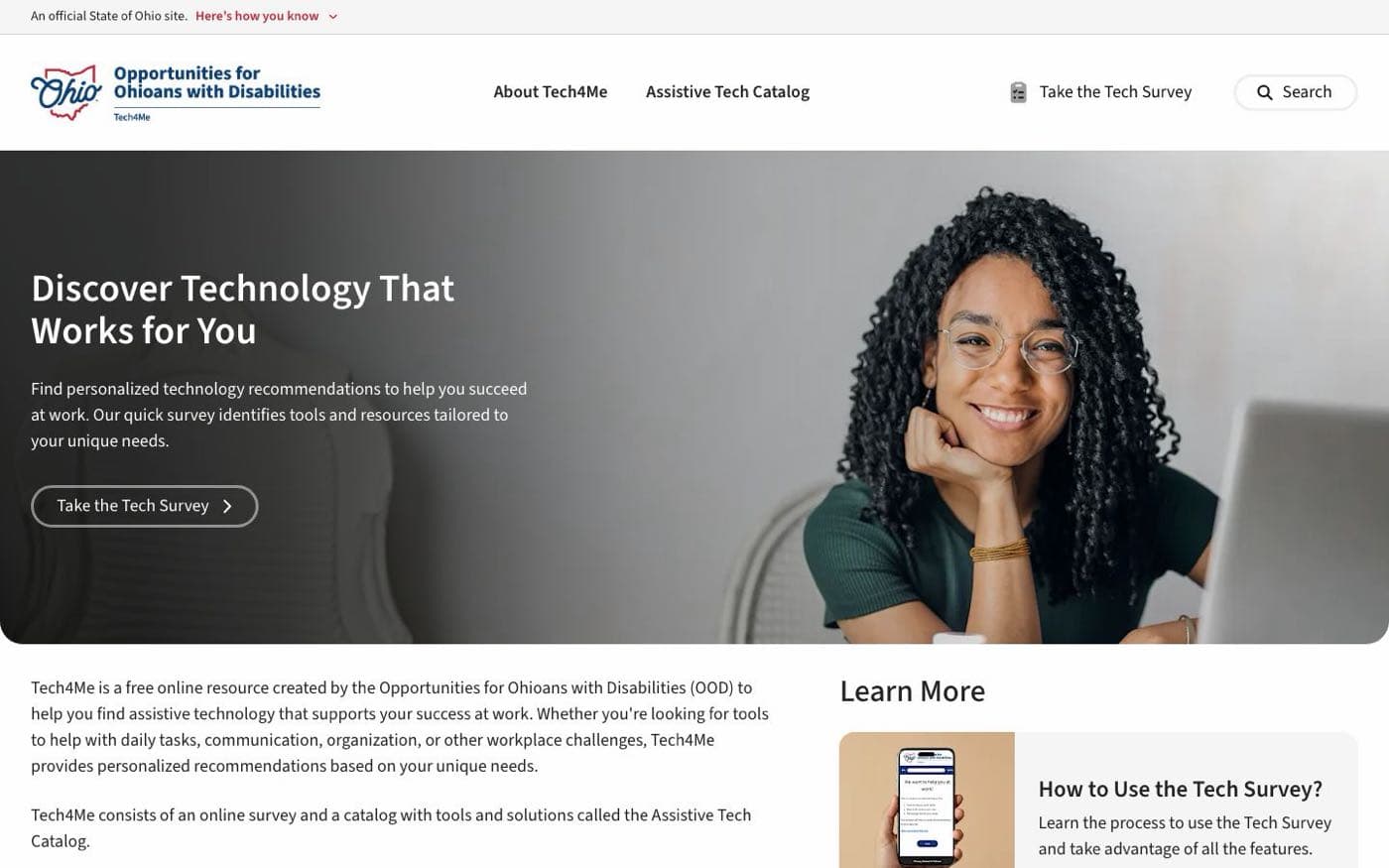
In parallel we built the site builder: shared templates, widgets and authoring workflows, so a new agency site starts with the same common sections and components instead of from scratch. We used it to deliver the first agency sites, Agriculture, Health and the Bureau of Workers’ Compensation, each with its own authors, editors and approvers. That toolkit became the foundation of the InnovateOhio Platform, a story we tell in its own case study.
Accessible and maintainable from day one
The shared components were tested against Section 508 and WCAG 2.0. A standard taxonomy and authoring workflow set how content is created, approved, promoted and retired, and we wrote content guidelines, how-to guides and a cheat sheet for authors and trained them before launch, so the State’s team could keep the site current on its own.
Impact
The new Ohio.gov went live in 2018 as the first public site on the State’s new platform, alongside the first agency sites built with the same toolkit. By 2020 the State reported 48 State websites transformed on the platform.
The five topics have outlasted the visual refreshes since: in September 2026 Ohio.gov still greets people with services for residents, travel and tourism, find jobs, tools for business and our State government, and it still runs on the site builder that began with this project.
Base22 designed and built Ohio.gov and its site builder as a subcontractor to Deloitte, from July 2017 to February 2019.